Stable Processes with Slow Ornaments
for viola, bass clarinet, and eight tape players
Supported by Britten-Pears Arts
Premiered November 2022 at the former telephone-switching room in The Art Station, Suffolk
Bandcamp Best of Contemporary Classical, October 2025:
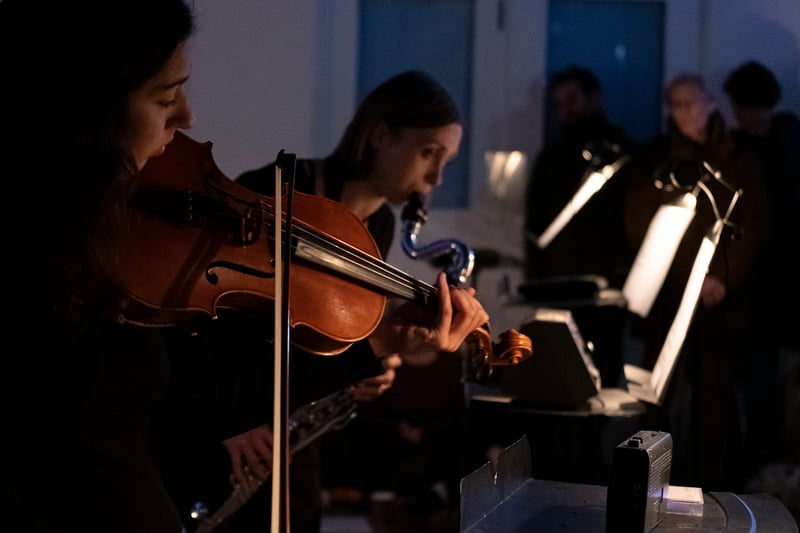
'Theo Alexander’s Stable Processes with Slow Ornaments blurs the line between performance and sound installation: bass clarinetist Charlotte Jolly and violist Meghan Cassidy play fuzzy long tones while moving around eight different stations located in the performance space, evoking Luigi Nono’s classic No hay caminos, hay que caminar. At each, they encounter sections of the score, as well individual cassette players transmitting a mixture of sampled church organ and vibraphone. The entire piece emerges from a gauzy scrim of white noise, as the blurred definition of each articulated sound levitates and blends in a meditative aura more about atmosphere than narrative. The dance between the various elements is endlessly beguiling, with the abstract gestures voiced by Jolly and Cassidy moving in and out of focus, alternating between palpable gestures with minimalist patterns and degraded tones. The whole thing arrives a kind of lush fever dream, drifting from dream state to bracing sentience.'
Supported by Britten-Pears Arts
Premiered November 2022 at the former telephone-switching room in The Art Station, Suffolk
Bandcamp Best of Contemporary Classical, October 2025:
'Theo Alexander’s Stable Processes with Slow Ornaments blurs the line between performance and sound installation: bass clarinetist Charlotte Jolly and violist Meghan Cassidy play fuzzy long tones while moving around eight different stations located in the performance space, evoking Luigi Nono’s classic No hay caminos, hay que caminar. At each, they encounter sections of the score, as well individual cassette players transmitting a mixture of sampled church organ and vibraphone. The entire piece emerges from a gauzy scrim of white noise, as the blurred definition of each articulated sound levitates and blends in a meditative aura more about atmosphere than narrative. The dance between the various elements is endlessly beguiling, with the abstract gestures voiced by Jolly and Cassidy moving in and out of focus, alternating between palpable gestures with minimalist patterns and degraded tones. The whole thing arrives a kind of lush fever dream, drifting from dream state to bracing sentience.'